Why the Wall Tells You Less Than You Think
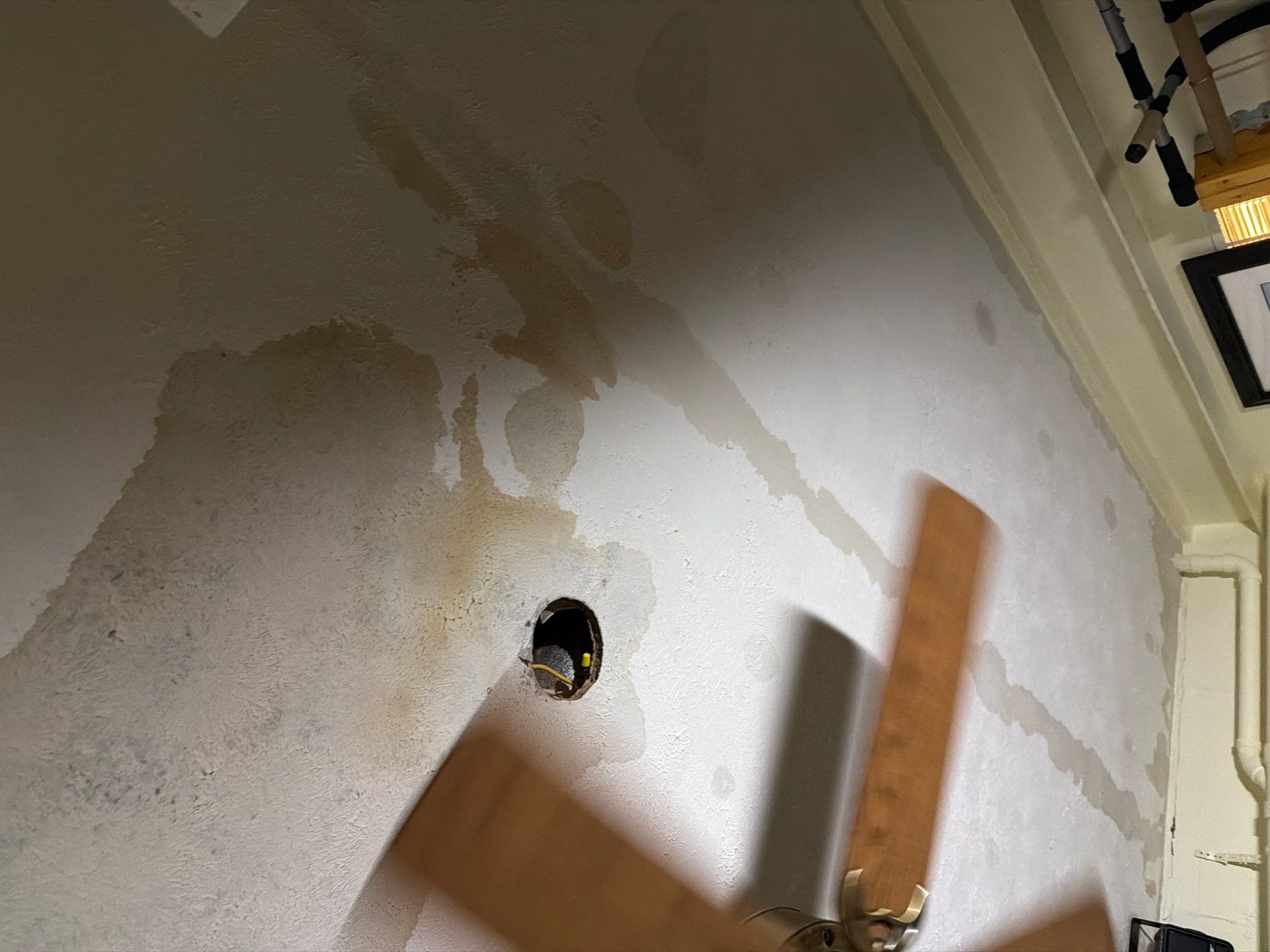
Water behind drywall does not behave the way intuition suggests. A pinhole in a copper supply line on the second floor can travel along a stud bay, soak insulation, and finally appear as a stain in a first floor ceiling fifteen feet away from the actual break. A slow drain leak under a tub can saturate the subfloor for months before any visible evidence reaches the room below. The stain you see is the end of the journey, not the beginning, and that is exactly why opening the wall where the stain appears is so often the wrong first move. We have walked into homes where a previous contractor cut four separate inspection holes chasing a discoloration, only to discover the actual failure was a loose shower arm escutcheon two rooms away.
Gravity, capillary action, and the path of least resistance all shape where water ends up. Framing members act like rails, guiding flow horizontally along top plates and vertically down studs. Insulation, especially fiberglass batts, can hold pounds of moisture before any of it weeps out where you can see it. Vinyl wallpaper and oil based paint can trap moisture inside the cavity for weeks, then release it all at once when a seam finally fails. In two story New Castle homes with finished basements, we sometimes find the visible stain three floors below the actual leak, having traveled along a chase shared by plumbing, HVAC, and electrical runs.
The investigation we run starts with conversation. When did you first notice the change. Has the water bill shifted. Are there fixtures above the affected area, and what is the plumbing material in this part of the house. Older New Castle homes often have a mix of galvanized, copper, and PEX from different remodels, and each material fails in its own pattern. Galvanized tends to corrode and seep at threaded joints. Copper develops pinholes from water chemistry or stray current. PEX is generally durable but suffers at fittings if it was installed under stress. Knowing the likely failure mode narrows the search before any equipment comes out of the truck.
The Tools That Replace the Sledgehammer
Detection equipment has come a long way, and modern non invasive inspection rests on layering several technologies rather than trusting any single one. Thermal imaging cameras read surface temperature differences, and wet materials behave differently than dry ones as they evaporate or hold ambient cool. A thermal scan does not see water directly, but it shows the thermal shadow of moisture in a way that guides where to look next. We pair that with pinless capacitance meters that read moisture content through the surface, and pin meters that confirm the reading by direct contact at the wettest spot. For a deeper look at how we map saturation zones across an assembly, our guide to moisture mapping with thermal imaging walks through the process in detail.
When the leak is pressurized supply line, we sometimes bring in acoustic listening equipment that picks up the high frequency hiss of water escaping under pressure through the structure. For drain leaks, which are intermittent and unpressurized, we may run controlled water through fixtures while monitoring downstream walls and ceilings, isolating which fixture is the culprit. Borescopes let us slide a small camera through an outlet box or a one inch hole in an inconspicuous location to see directly into a stud bay without opening the wall face. A typical investigation in a New Castle home uses three or four of these methods in combination, and the redundancy is what makes the conclusion trustworthy.
Conditions in the home matter to the accuracy of these tools. Thermal cameras work best when there is a meaningful temperature differential between the water and the surrounding structure, which is why we sometimes ask homeowners to adjust the thermostat an hour before our arrival or to run hot water through a suspected fixture to create a clearer signal. Recently painted walls, mirrored surfaces, and direct sunlight through windows can all produce false readings, so we cross check with moisture meters before drawing any conclusion. Acoustic detection requires a relatively quiet house, which is why early morning or late evening appointments often yield cleaner results in busy households. The New Castle Water Restoration technicians who handle these calls have learned to read not just the instruments but the conditions around them, and that judgment is what turns raw data into a confident locate.
What Happens After We Find It
Once the source is located, our role and the plumber's role separate cleanly. A licensed plumber repairs the failed pipe or fitting. We dry the structure, decide which materials can be saved, and remove only what cannot. Insulation that has been wet for more than 48 hours generally cannot be restored, and drywall that has wicked moisture vertically up a stud bay often needs a controlled flood cut at a clean height. For the boundary decisions on wall material, the guidance in our piece on how much drywall has to come out after water damage reflects the same standards we apply in the field. If the leak ran undetected for weeks, we will also discuss mold testing, because the 48 hour rule for mold growth means hidden long term leaks almost always involve some level of microbial activity behind the surface.
Documentation matters at this stage as much as the physical work. Every reading we take, every photograph of the cavity, every thermal image gets logged with time stamps and location notes. If an insurance claim is involved, that record is what supports coverage for the repair scope, and the difference between a thorough file and a sparse one can be thousands of dollars in approved versus denied costs. We provide that documentation directly to the adjuster on request, and homeowners receive a copy for their own records. When the plumber arrives to make the repair, our locate report tells them exactly where to access the line, which often saves an hour or more of their billable time and reduces the opening we have to manage afterward.
The honest answer about timeline is that detection itself is usually a one to two hour visit. Drying after repair typically runs three to five days depending on how saturated the framing became and how much air movement we can establish. Equipment placement gets adjusted daily as readings change, and we do not pull dehumidifiers and air movers until moisture content in the framing matches an unaffected reference area elsewhere in the home. New Castle Water Restoration dispatches in most cases within 2 hours of your call across New Castle and the surrounding service area, and the initial assessment is free. Catching a hidden leak early, before insulation fails and framing softens, is the single biggest factor in keeping a small problem from becoming a renovation, and that is the reason we built the detection process the way we did.